

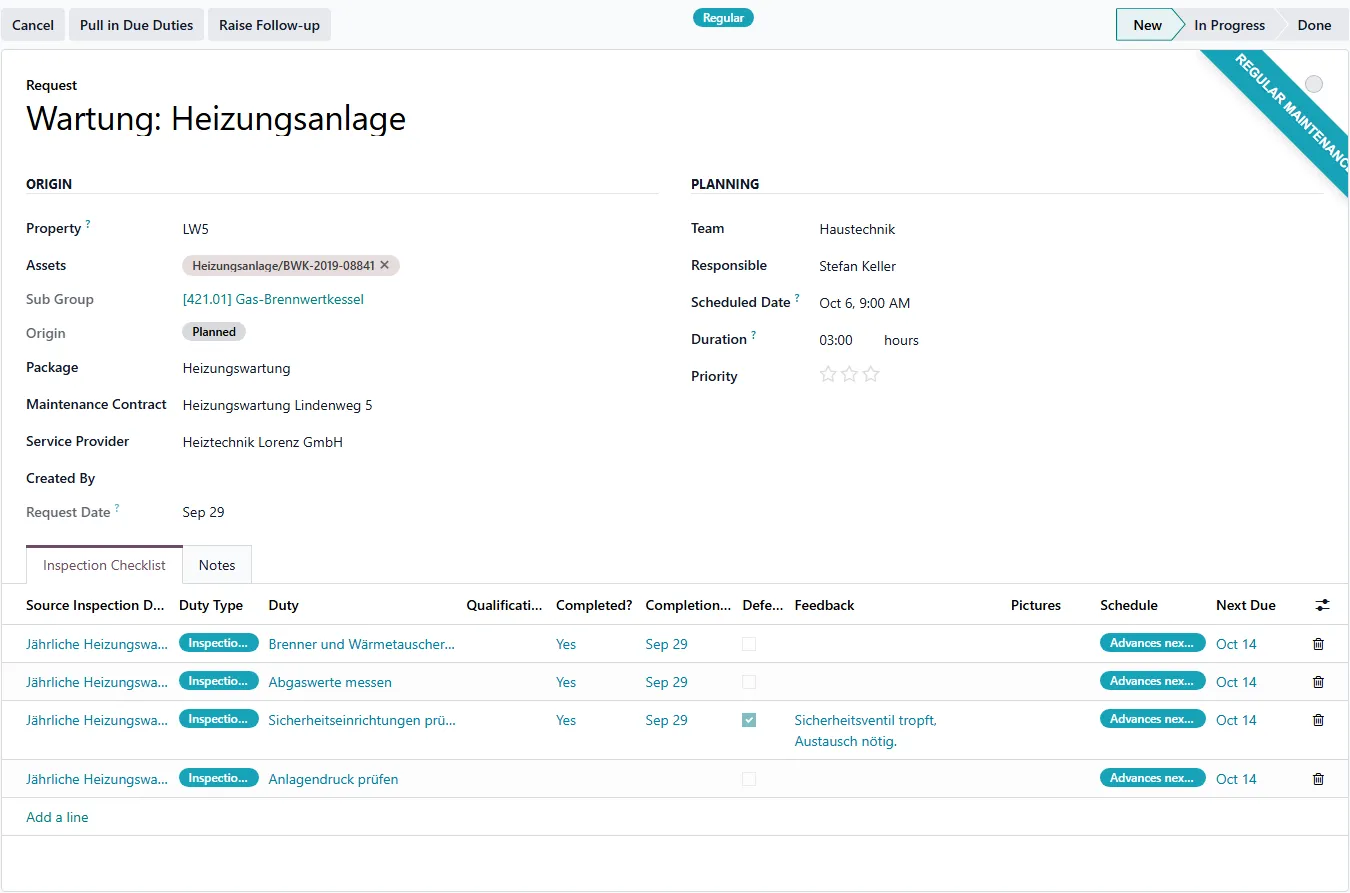
In this module you keep the technical assets of your properties, for example heating, elevators or backflow valves. Each asset carries its recurring duties. SMARTBRIX calculates the due dates from them and shows what needs to be planned. Planning creates maintenance jobs with a date, a technician and a checklist. Completing a maintenance updates the date of the last maintenance, and the next deadline starts.
Building maintenance appears in the main menu as its own app, Property Maintenance.
- Asset: a technical installation of a property that needs maintenance or inspection. An asset can consist of Components, for example a heating system made up of a burner and two pumps.
- Asset template: the blueprint of an asset with components, features and duties. You can create any number of identically structured assets from one asset template.
- Inspection duty: a recurring inspection with a deadline, for example “annual heating maintenance”. The next due date counts from the day the last maintenance was completed.
- Routine task: routine work on a fixed calendar cycle, for example “inspection round every Monday”. The dates are fixed in the calendar, no matter when the last one was done.
- Maintenance demand: all duties and reports that do not have a date yet.
- Maintenance: the actual job with a date, a technician and a checklist.
- Maintenance package, maintenance contract, customer contract: the commercial side. It defines which service provider does the work and what you charge your client.
Workflows
Section titled “Workflows”- Setup: settings, maintenance teams, qualifications and features.
- Asset catalog and templates: cost groups according to DIN 276, sub groups and asset templates with duties.
- Assets: create assets on the property, components, asset structure, decommissioning.
- Inspection duties and routine tasks: set the cycle, start duties, track due dates.
- Plan maintenance: maintenance demand, scheduling and the maintenance plan.
- Carry out maintenance: checklist, completion, follow-ups.
- Contracts and maintenance packages: commission service providers and sell services to clients.
- Contract management: utility contracts, insurance and service providers per property, meters and price guarantee.
- Tickets: record reports and create maintenance and purchase orders from them.
Didn't find an answer? Contact support